
English| EUR
Suggested for you
More currencies
Choose a language
Whistler Mountain's via ferrata draws climbers who want alpine exposure without technical rock skills, but the route's reputation varies widely depending on weather, fitness level, and expectations. This page compiles feedback from climbers who've completed the course, breaks down the difficulty consensus, and flags the conditions that separate a memorable ascent from a frustrating one.
Quick answer
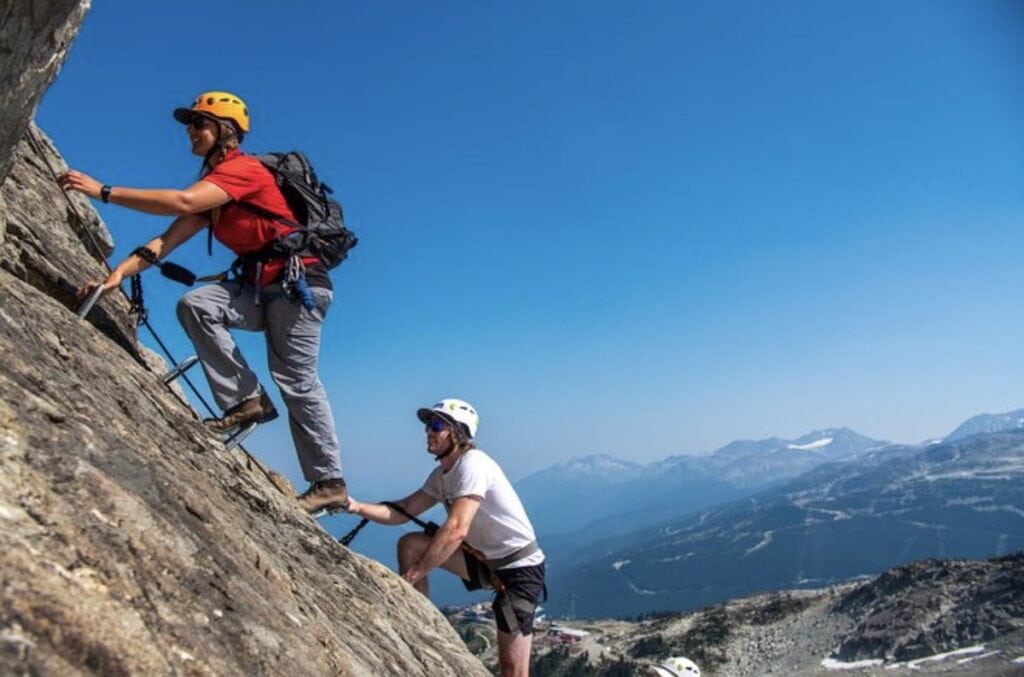
Whistler via ferrata reviews consistently highlight the route's dramatic alpine exposure and well-maintained cable systems, with most climbers rating the difficulty as moderate to challenging depending on upper-body strength and comfort with heights. The guided tour format receives strong marks for safety briefings and equipment quality, though several reviewers note that weather shifts can transform the experience — morning starts in stable conditions earn the highest satisfaction scores.
The via ferrata route on Whistler Mountain operates at an elevation where cloud cover can roll in with little warning, and climber reviews divide sharply along that weather line. Those who ascended in clear morning windows describe the exposure as exhilarating rather than nerve-wracking, while groups caught in afternoon fog report that the visual reward — the reason most book the climb — disappears behind gray curtain. The cable system itself earns uniform praise: steel rungs are spaced for natural reach, anchor points are inspected daily, and the harness setup allows confident movement across the traverse sections. Whistler via ferrata reviews frequently mention two physical demands that catch first-timers off guard. The initial pitch requires sustained arm engagement to pull yourself up a near-vertical face, and fatigue compounds quickly if your technique leans on grip strength rather than footwork. The second surprise is cumulative leg burn during the descending traverse, where controlled downclimbing tests the quads more than the ascent did. Climbers with a baseline of hiking fitness and any prior scrambling or climbing gym experience report feeling challenged but capable; those arriving with neither often describe the middle section as a struggle. Guide performance shapes the experience as much as the route itself does. Reviews consistently credit the Mountain Skills Academy team with patient instruction during the ground-school safety briefing and attentive pacing once on the rock. The 199 CAD guided tour fee covers the instructor, all technical gear, and the safety protocols that keep the route accessible to non-climbers, though it does not include the lift ticket required to reach the trailhead. That separation surprises some visitors who expect an all-in package, so budget accordingly. Weather patterns in Whistler's alpine zone shift faster than in the valley, and the window for ideal climbing conditions is narrower than the daily operating schedule suggests. The majority of positive whistler via ferrata reviews come from groups that started between 9:00 and 10:30, when visibility is statistically highest and afternoon convection has not yet built the cloud deck that obscures the Coast Range views. Late starts gamble on stability, and that gamble does not always pay out.
“The cable system itself earns uniform praise: steel rungs are spaced for natural reach, anchor points are inspected daily, and the harness setup allows confident movement across the traverse sections.”
The best arrival window for the Whistler Via Ferrata is between 09:00 and 13:00. This schedule allows for optimal weather conditions and ensures completion before potential late afternoon weather shifts.
Warm with highs near 22°C
Clear skies are common but mountain weather changes quickly during the afternoon.
Cooler temperatures averaging 10°C to 15°C
Early and late season offer quieter trails and stable morning conditions.
—
Starting within the 09:00–13:00 window provides the most consistent climbing experience.
Verdict: The optimal approach is to plan your climb between Tuesday and Thursday during the 09:00–13:00 arrival window to experience the most reliable conditions.
The cost to participate in the Whistler Via Ferrata experience is structured around the professional guided tour fee. Please note that this fee covers the climbing experience but requires an additional separate purchase for mountain lift access.
Verdict: A typical adult pays 199 CAD for the guided tour plus the cost of a required Whistler Mountain lift ticket.
The Whistler Via Ferrata operates on a consistent daily schedule throughout the week. Visitors can plan their excursions based on these uniform hours of operation.
The via ferrata experience spans approximately 3–4 hours from check-in to descent. Each step below outlines the procedure from reservation through to completing the route.
Reserve through the official Mountain Skills Academy site at least 48 hours in advance. Many visitors mistakenly assume walk-ups are accepted, but all departures require advance booking and lift ticket coordination.
Check in at the base of Whistler Mountain and purchase your lift ticket separately if you haven't already. The tour fee does not include gondola access, a detail frequently overlooked during planning.
Your group assembles at the designated meeting point on the mountain after ascending. Guides distribute helmets, harnesses, and lanyards, then conduct a safety briefing covering clipping technique and movement sequence.
Follow your guide along the fixed cable route, clipping and unclipping at each anchor transition. First-timers often rush the clipping motion; deliberate, rhythmic movement prevents fatigue and maintains safety margins.
After finishing the via ferrata route, return equipment to the staging area and take the gondola back to the village. Allow time to decompress—adrenaline often masks exertion until after you've unclipped.
Arrive prepared for alpine conditions and a full morning on the mountain.
Everything you need to know about whistler via ferrata reviews
Most participants in whistler via ferrata reviews describe the course as approachable for beginners, provided they do not have a fear of heights. The route utilizes fixed cables and metal rungs to ensure safety while navigating the rock face.
Consistent with whistler via ferrata reviews, moderate physical fitness is required to handle the sustained climbing sections. Visitors should be comfortable with basic movement and spending time at high altitude.
Every tour is led by certified professionals, as highlighted in numerous whistler via ferrata reviews. These experts manage all safety protocols, allowing participants to focus on the alpine environment.
Many families note in Whistler alpine climb reviews that the activity is suitable for older children who meet the minimum height and weight requirements. Safety harnesses and professional supervision ensure a secure environment for younger climbers.
Visitors often comment in whistler via ferrata reviews that the guided experience offers high value due to the unique perspective of the mountain terrain. You may consult the official site to review current activity details and inclusions.
Participants are equipped with a harness, helmet, and energy-absorbing lanyards as standard procedure. All technical equipment is supplied by the operator to maintain safety standards throughout the climb.
The activity is located on Whistler Mountain, accessible by riding the lift system. You must purchase a separate lift ticket in addition to the guided tour fee to reach the starting area.
Frequent mentions in whistler via ferrata reviews suggest that choosing a morning departure is ideal for optimal visibility and stable weather. Because mountain conditions can change, guides monitor the forecast to ensure a safe environment for all guests.
Whistler Via Ferrata Tour Options
Read more GuideIs Whistler Via Ferrata Dangerous?
Read more GuideVia Ferrata Rating System Explained
Read more GuideWhistler Via Ferrata Route Map
Read more GuideWhistler Via Ferrata Reddit Insights
Read more GuideWhistler Via Ferrata Without a Guide
Read more