English| EUR
Suggested for you
More currencies
Choose a language
Via ferrata routes blend alpine exposure with engineered protection, and questions about danger are common among first-timers. Whistler Mountain's course runs at high elevation with fixed cables, steel rungs, and a four-hour duration. This guide examines the actual hazards, the safety protocols in place, and what level of fitness and nerve the route demands.
Quick answer
Via ferrata on Whistler Mountain is not dangerous when participants follow guide instructions and use the provided safety equipment correctly. The route features a continuous steel cable system, and climbers remain clipped in at all times with dual lanyards. Falls are prevented by the tether system, and guides assess weather and participant readiness before each tour. Physical exertion and exposure to height are the primary challenges, not technical climbing risk.
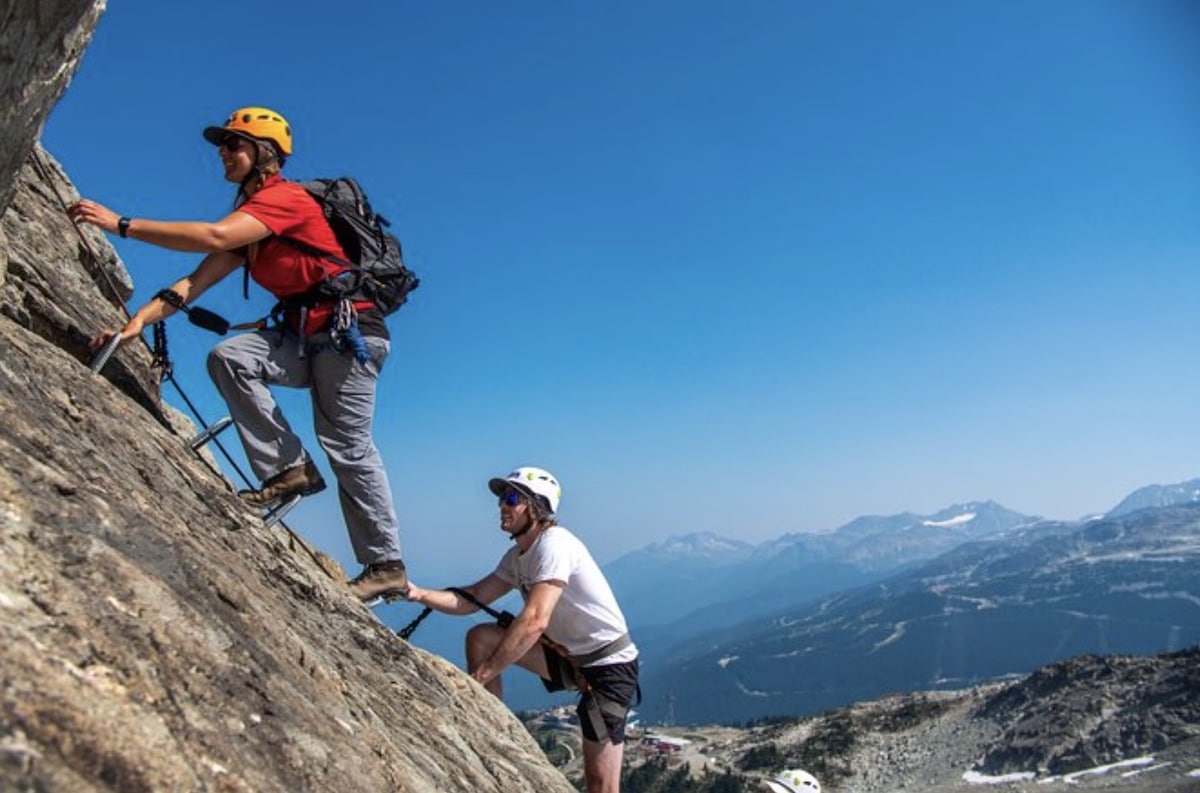
Whistler Mountain's via ferrata sits at 2,182 meters above sea level, where weather shifts in minutes and the granite faces drop hundreds of meters below the fixed route. The term via ferrata translates to "iron road," a system invented in the Dolomites during World War I to move troops across vertical terrain without mountaineering skills. Modern routes retain that principle: steel cables anchor every section, and climbers clip their harness lanyards to the cable, creating a mechanical link that arrests any slip. The question of danger centers not on whether the system works—it does—but on whether participants will follow the procedures that make it work. The Whistler route is a guided experience, and every tour begins with a safety briefing at the base. Guides demonstrate the Y-lanyard technique, in which one carabiner remains clipped while the second is transferred past each anchor point. The system prevents detachment, but only if climbers move one carabiner at a time and confirm each clip before unclipping the trailing lanyard. Human error—rushing a transition, skipping a check—is the variable the equipment cannot fix. Mountain Skills Academy, the operator, requires all participants to wear helmets and uses Figure Eight descenders for controlled rappels on the descent sections. The gear is rated for forces far exceeding body weight, and the cable itself is inspected seasonally. Exposure is the psychological element most first-timers underestimate. The route includes suspension bridges, vertical ladders, and traverse sections where the cable runs along a sheer face with open air below. Acrophobia manifests differently under real height than in imagination, and some participants freeze mid-crossing. Guides are trained to talk climbers through these moments, but the route cannot be shortened once underway—the return path is forward. Fitness matters as much as nerve: the tour spans four hours of continuous climbing, and arm fatigue compounds anxiety on the final sections. Wind and rain amplify both the physical and mental load, and tours are canceled when conditions exceed safe thresholds. Statistically, via ferrata incidents are rare and almost always involve user error—unclipping both lanyards simultaneously or ignoring guide instructions. Whistler's via ferrata has operated without serious injury since its 2014 opening, a record sustained by guide vigilance and participant screening. The risk of via ferrata danger is not absent, but it is managed through redundancy: two lanyards, continuous cables, and professional oversight at every anchor transition.
“The system prevents detachment, but only if climbers move one carabiner at a time and confirm each clip before unclipping the trailing lanyard.”
Because via ferrata involves high-altitude exposure, many visitors equate the activity with traditional unguided mountaineering. Professional safety systems and guided oversight significantly mitigate these perceived risks.
MythYou are free-climbing without safety systems
FactParticipants are securely clipped to a continuous steel cable system via a specialized energy-absorbing harness throughout the entire route.
MythThe tour requires expert climbing skills
FactGuided tours are designed for diverse experience levels, as the fixed aids provide stability and security for beginners.
MythExposure to heights is unregulated
FactTrained guides manage the environment and ensure all safety protocols are followed during the 4-hour guided experience.
Most incidents on via ferrata routes stem from preventable errors rather than inherent danger. Recognizing these missteps helps visitors manage risk and complete the course safely.
Ignoring guide instructions during the safety briefing
Listen carefully to your guide's demonstration of clipping techniques and movement protocols. These instructions are based on real accident patterns and address the specific exposure points on Whistler's route.
Failing to maintain three points of contact while moving
Always keep at least three limbs secured—two hands and one foot, or two feet and one hand—before advancing to the next cable anchor. Rushing between clips is the primary cause of slips on exposed sections.
Overestimating fitness level when booking the four-hour tour
The route demands sustained arm strength and grip endurance across steep rock faces. If you cannot comfortably hang from a pull-up bar for 20 seconds, consider building strength before attempting the course.
Clipping both carabiners to the same cable segment simultaneously
This defeats the continuous belay system. Unclip and move one carabiner past each anchor point before releasing the second, ensuring you're always attached to the steel cable.
Wearing inadequate footwear like running shoes or hiking sandals
The route requires ankle support and aggressive tread for wet rock. Approach shoes or stiff hiking boots with Vibram soles provide the necessary grip on vertical and overhanging sections.
The cost of the Via Ferrata experience is based on the guided tour fee. Please note that a valid lift ticket is required to access the mountain and is sold separately from the tour price.
Verdict: A typical adult pays 199 CAD for the tour, plus the cost of a separate lift ticket required for mountain access.
The guided via ferrata tours operate daily throughout the week. Visitors should plan their arrival within the designated window to complete the full tour experience.
Prepare these essentials before your guided tour to minimize risk and ensure you meet physical and equipment requirements.
Everything you need to know about is via ferrata dangerous
The Whistler via ferrata is designed to be accessible to active beginners by using a continuous cable system that keeps climbers securely attached at all times. While it involves exposure to height, the professional equipment and guided instruction significantly mitigate the risk, making it clear why many ask if via ferrata dangerous before they begin.
Guides provide specialized training on how to use the harness and shock-absorbing lanyards before you step onto the mountain terrain. They manage the safety protocols throughout the ascent, ensuring that the inherent exposure of the alpine environment is handled with professional caution.
The primary difference is the permanent steel cable and rung system which provides constant protection, whereas traditional rock climbing requires more technical rope management. Understanding the safety design helps clarify whether is via ferrata dangerous for those accustomed to traditional mountain activities.
Children can participate if they meet the minimum age and physical requirements set by the operators. Guides assess each participant's ability to navigate the rungs and cables to ensure the experience remains safe and enjoyable for younger climbers.
The guided tour typically takes 4 hours from start to finish. We recommend arriving within the 09:00–13:30 window to ensure you have adequate time to complete the full mountain circuit before the daily closing time.
While many people wonder is via ferrata dangerous because of the elevation, the presence of the cable system provides a strong sense of security. If you are prone to vertigo, the guides are experienced in coaching climbers through exposed sections to build confidence.
Safety is the priority, and the guiding team constantly monitors weather patterns on the peak. Tours may be adjusted or rescheduled if conditions such as lightning or high winds make the climbing path unsafe.
Bookings are managed through the official Mountainskills Academy website. You can secure your spot online, keeping in mind that the base fee is 199 CAD and does not include the mandatory lift ticket required to access the peak.
Whistler Via Ferrata Tour Options
Read more GuideVia Ferrata Rating System Explained
Read more GuideWhistler Via Ferrata Route Map
Read more GuideWhistler Via Ferrata Reddit Insights
Read more GuideWhistler Via Ferrata Without a Guide
Read more GuideWhistler Via Ferrata Reviews
Read more